
Star-Delta Overload Settings Explained for Pump Control Panels
Why star-delta overload settings are often wrong on pump control panels
This technical note explains why overload relay settings on star-delta (Y/D) motor starters are frequently set incorrectly, the engineering principles behind correct settings, and the practical consequences for pump systems.
Star-delta starters are widely used on pump motors to reduce starting current and minimise water hammer. Despite their advantages, overload relay settings on star-delta panels are frequently incorrect. This misunderstanding can lead to motor damage, nuisance tripping and reduced pump reliability.
How star-delta starters affect overload current
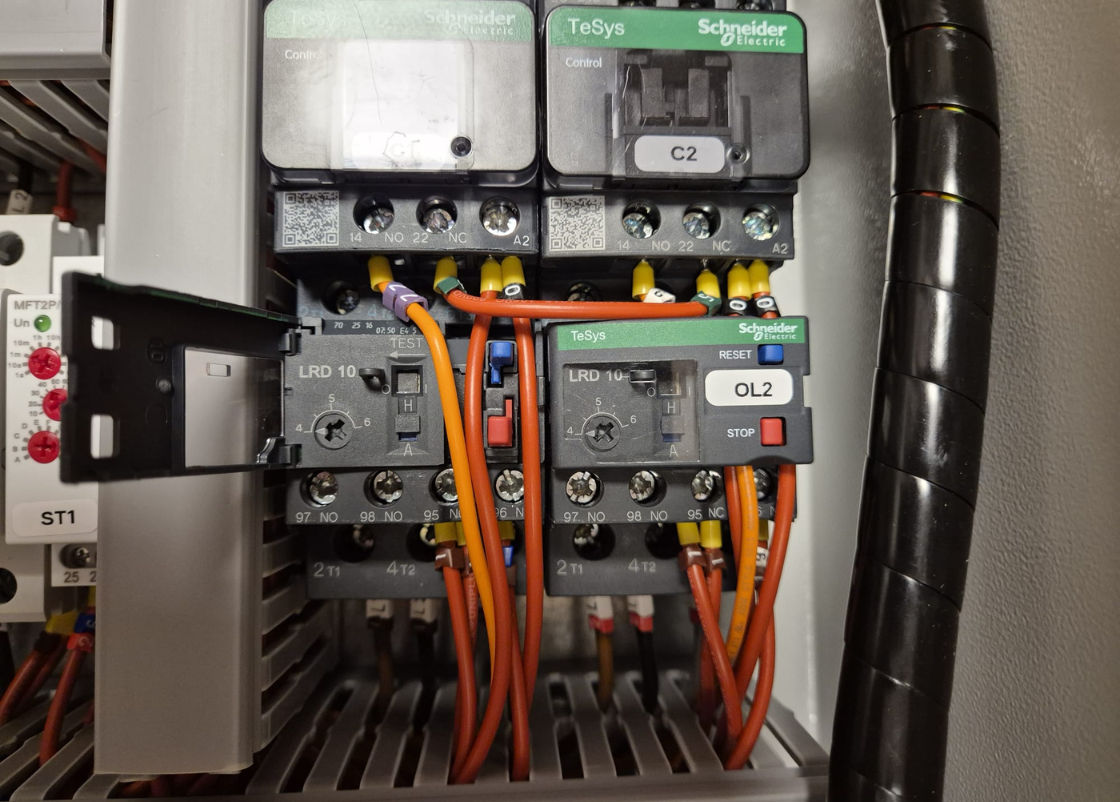
During star starting, motor windings receive reduced voltage, meaning the overload relay often measures a lower current than the motor’s full-load current.
In many panels where the overload sits in the winding circuit, the correct setting is:
Overload setting ≈ 0.58 × motor full-load current
Example: 0.58 x 15 A (Pump FLC) ≈ 8.7 A
Failure to apply this factor results in incorrect protection.
Risks of incorrect overload settings on pump motors
Overload set too high
- Loss of effective thermal protection
- Motor overheating and insulation damage
- Increased risk of catastrophic motor failure
- Pump operating under damaging load conditions
Overload set too low
- Nuisance tripping
- Startup failures
- Reduced process reliability
Additional considerations for pump systems
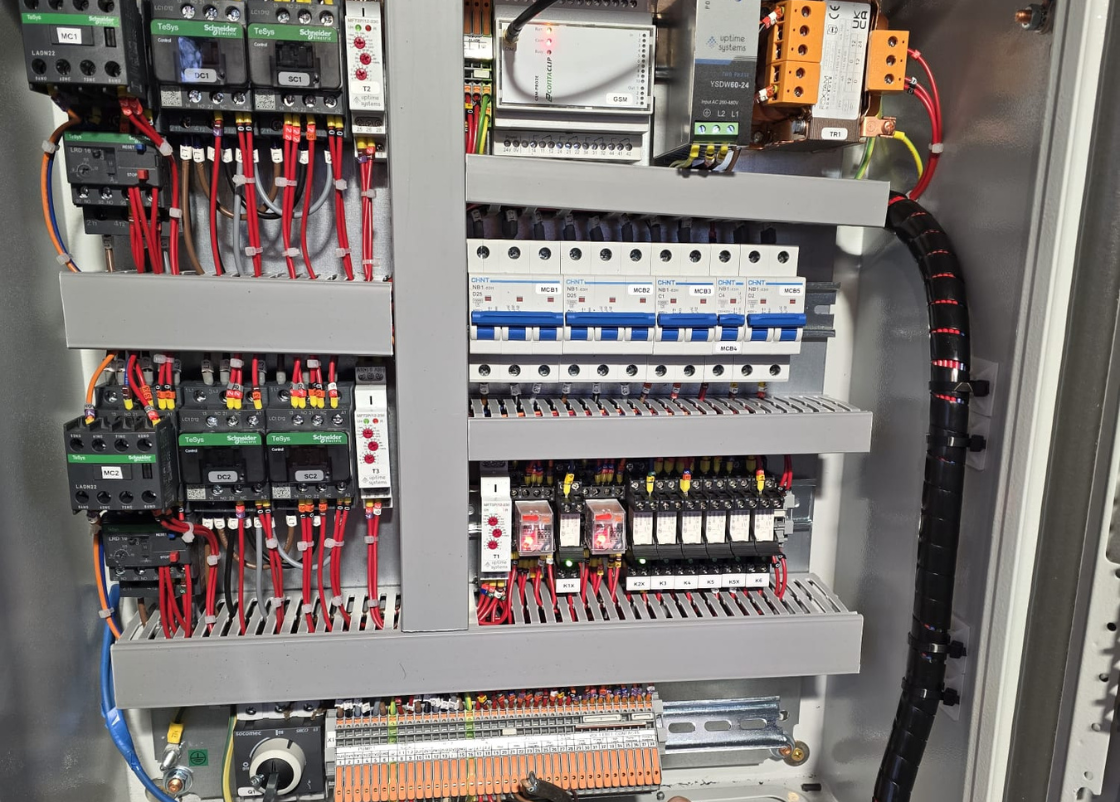
Because pumps impose variable hydraulic load, incorrect overload settings can mask:
- Blocked impellers
- Closed valves
- Cavitation
- Mechanical seizure
- Pipework pressure issues
Correct protection therefore supports both motor health and hydraulic system integrity.
Incorrect overload settings on star-delta pump panels are one of the most common hidden reliability risks in pumping systems. Applying the correct calculation ensures proper motor protection, improved pump lifespan and greater operational reliability.
Speak with our experienced team
Can’t see what you’re looking for or need a quotation? Get in touch with our team to help with your solutions.